

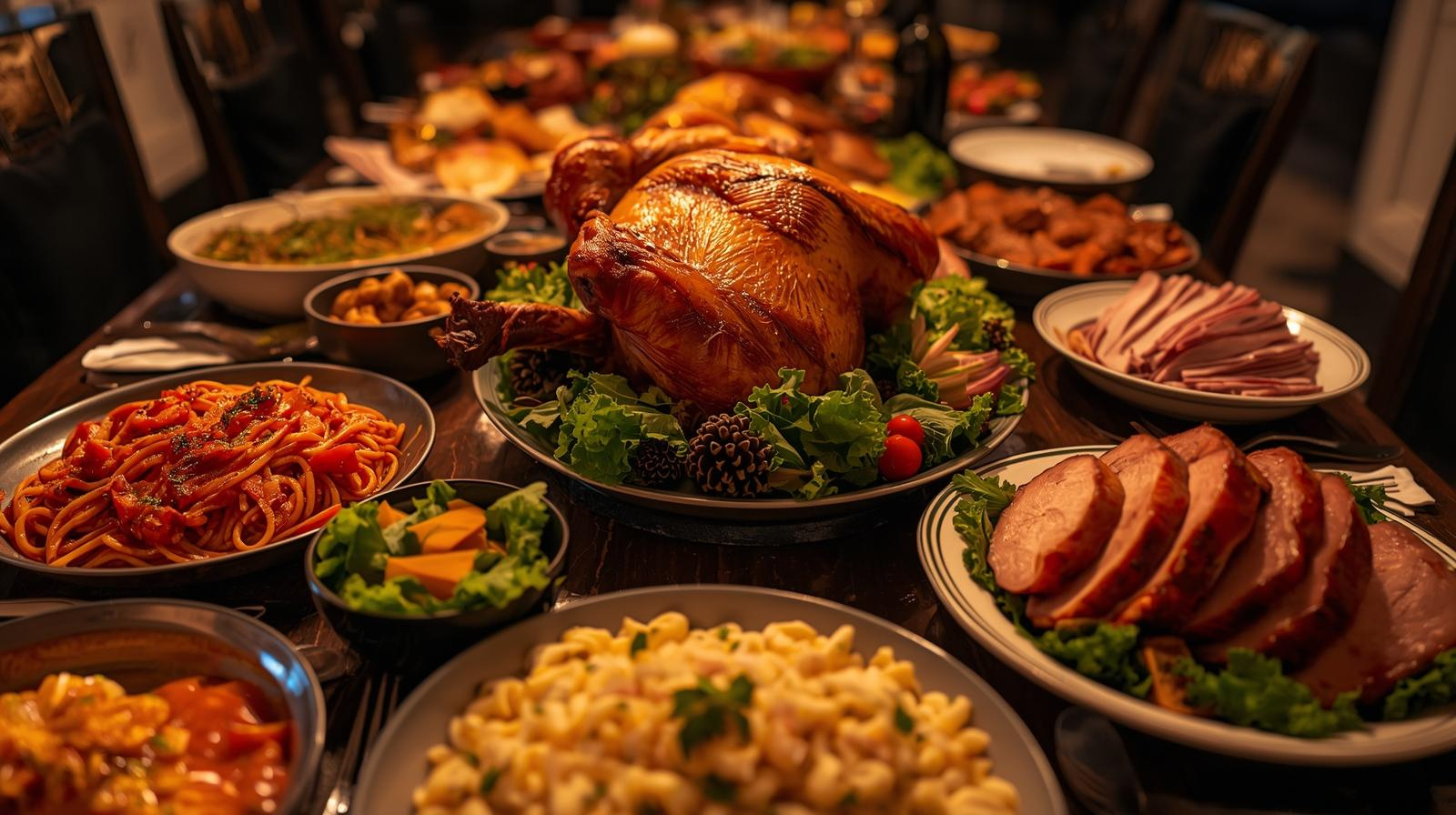
You know the drill. When the 2nd and 3rd week of December rolls around, the Christmas parties, get-togethers, reunions, and end-of-the-year festivities come flooding in.
There will be food…and lots of it.
There will be lechon, spaghetti, menudo, inihaw, fruit salad, and macaroni. All of them are vying for a place of prominence on your plate. And let’s not forget cakes, ice cream, and that bundle of imported chocolates your Balikbayan tito lugged home.
And before you know it…you’ve scarfed down the full ensemble.
Then, in a few minutes, you will be happily settling into a “food coma,” desperately fighting off sleep and the siren call of your grandma’s sofa.
Ever wondered why this happens? (It has a medical term by the way, “postprandial somnolence.”)
What causes it, and what can you do to ward it off?
Let’s talk about that, shall we?
This Christmas season, how does one sidestep this thing we call “food coma,” so you can fully enjoy the festivities (and not wake up when everybody has gone home…)?
Why You Feel Sleepy After A Big Meal
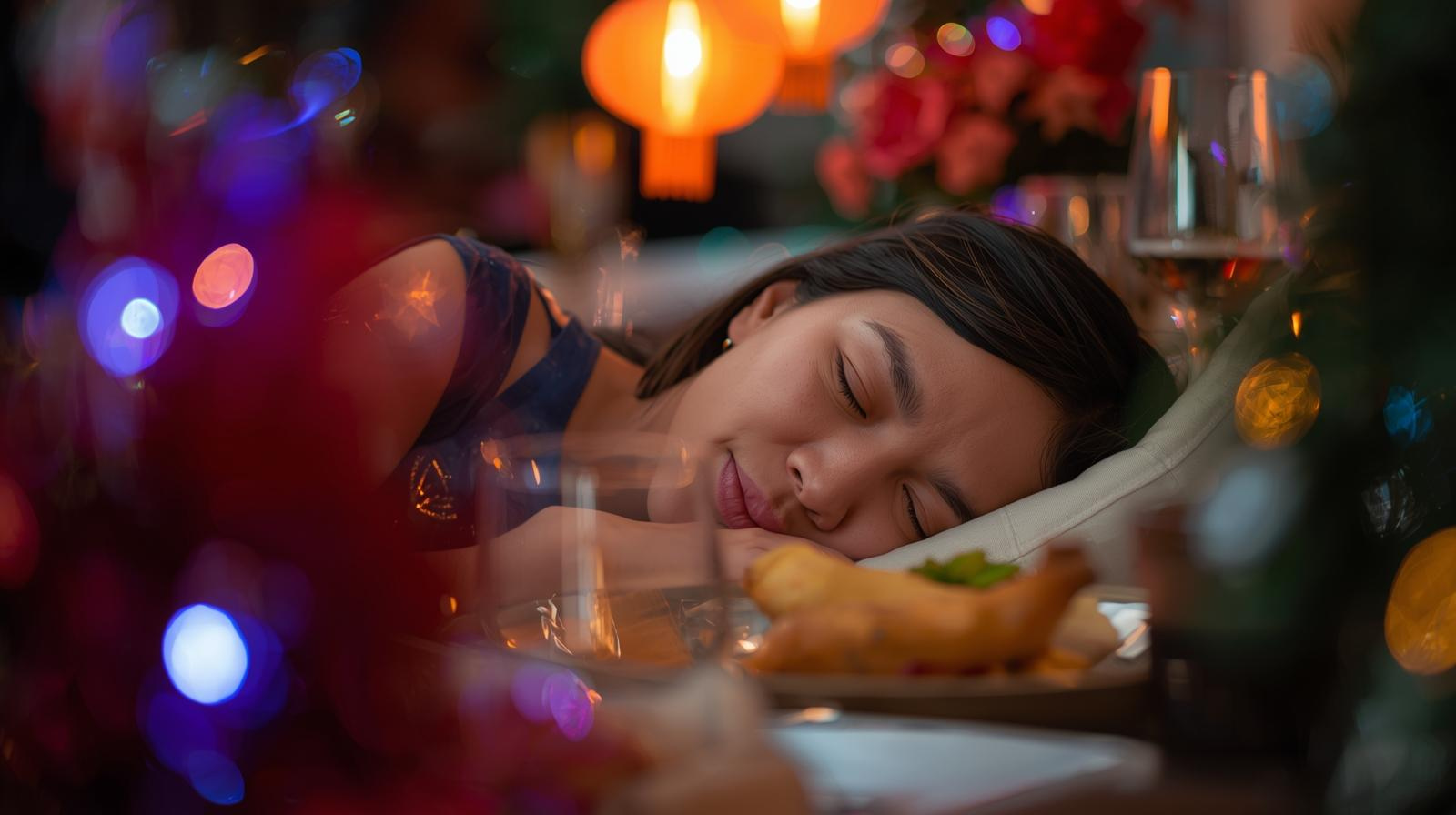
“Food coma” is characterized by:
Strong urge to lie down or close your eyes
Heavy or sluggish feeling in the body
Trouble focusing or following conversations
Slower movements or slower response times
Mild bloating or stomach heaviness
We’ve all been there at some point. The phenomenon used to be explained by changes in blood circulation after the meal. It was thought that an increase in blood flow to the gut (for digestion) negatively impacts the brain by diverting the distribution and limiting the supply of blood.
This is said to result in drowsiness after meals.
This narrative has been challenged, and there are even studies that show that blood flow to the brain increases after meals.
Our latest understanding of “food coma” seems to point to substances like tryptophan.
What You Eat
If you’re not aware of it yet, December festivities don’t hold back on carbs, fat, and proteins.
A. CARBS
Carbs come in the form of spaghetti, macaroni salad, rice, bibingka, puto bumbong, fruit salad, and every other dessert that mysteriously appears at every office gathering.
All these carbs do something interesting: they increase the availability of tryptophan in the brain.
Tryptophan is an amino acid that your brain uses to produce serotonin. That’s already a clue as to how this biochemical pathway leads to sleepiness because serotonin is linked with calmness and relaxation.
Serotonin doesn’t directly make you fall asleep, but it can tilt your body toward a more relaxed state. That gentle, mellow feeling after a big holiday dinner isn’t just in your imagination.
Studies show that carbohydrate-rich meals tend to shift the body toward slower, calmer energy.
B. PROTEIN & FAT
Christmas parties come with generous servings of ham, lechon, roast chicken, embutido, queso de bola, gravy, sauces, and more. These party staples are high in fat and protein.
These also happen to be high in tryptophan.
The combo of high carbs and high fat, and protein packs a wallop and turns those Christmas parties to be the setting of your next “food coma.”
How Much You Eat
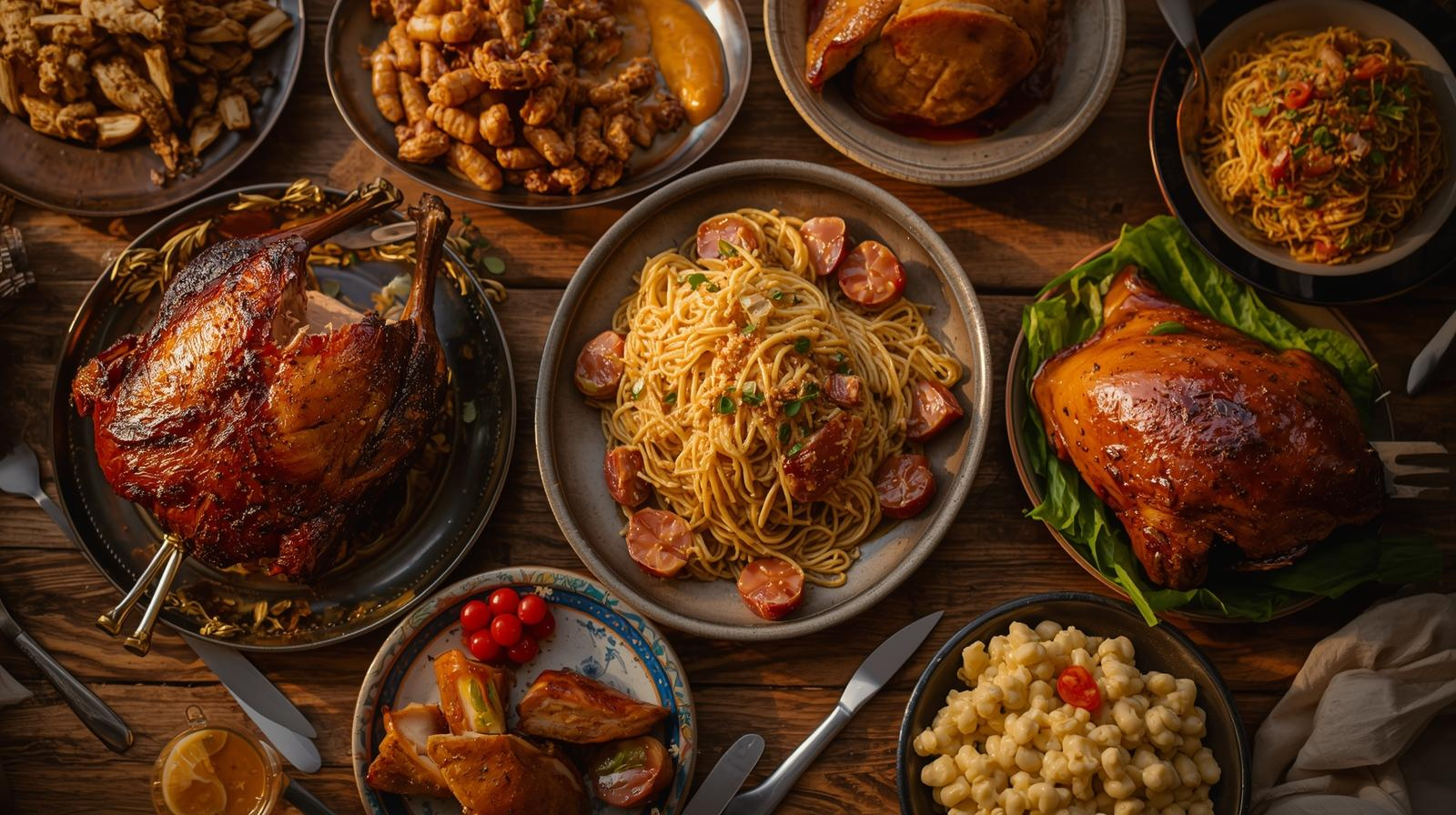
But it’s not just what we eat that primes our bodies for lethargy.
It’s also the size of the meal.
A study looked into the effects of eating until “comfortably full” versus eating until one “could not eat another bite.”
Researchers discovered that those who eat maximally, meaning those who ate until they could not eat another bite, reported increased fatigue and lethargy than the other group.
Massive meals are taxing not only to your digestive system but to your body as a whole, so you feel fatigued and lethargic after processing considerable amounts of food. Humans feel it, even a fly feels it after a big meal.
Another way of looking at it is through sugar spikes. Big meals give you a blood sugar high. This keeps you flushed with energy for a while, keeping you giddy as you go for seconds…but then you will have a crash later.
But the good news is that you don’t have to spend half the party fighting to keep your eyes open. Now that you know why that wave hits you after a holiday feast, we’ll talk about how you can avoid that post-lechon slump.
Your Anti “Food Coma” Game Plan
Staying alert during Christmas gatherings means you get to catch more of the stories, the jokes, and the chismis.
You get to enjoy the games instead of watching them from a monoblock. And, if you’re hopping from one gathering to another—which will probably be the case on December weekends—you’ll have more energy and far less end-of-the-night regret.
There are ways to enjoy every bite without going out of commission minutes later. It’s all about timing, balance, and a few smart habits.
#1 Strategic Portions & Timing
You don’t have to ignore the lechon.
A simple trick is to take a moderate first plate.
Before going for seconds, you wait a bit. Circulate and greet others, join in the laughter. Get busy. After pausing for about 10–15 minutes, your stomach will tell you if you really want more.
Think of a typical Filipino holiday spread. Instead of stacking rice, pancit, ham, macaroni salad, and dessert in one go, try filling only half your plate first.
Once you’ve eaten that and waited a bit, you can decide what you truly want for round two.
(This will also prevent that regret of looking at your plate and realizing you’ve taken too much…and wondering how you’re going to finish the whole thing.)
#2 Prioritizing
Looking at that colorful spread of the golden crispy lechon, red spaghetti, the glistening ham, the orange caldereta *(or menudo), green buko pandan, and yellow leche flan can easily tempt one to try all the colors of the rainbow.
Filipino parties are known not just for the high level of videoke but also for the endless supply of food.
But it’s okay, you don’t have to try them all. Don’t fall for the FOMO.
Your brain reacts to all the colors and smells and makes it feel like it’s a once-in-a-lifetime opportunity…(even though this same spread will appear at the next party in two days).
Prioritize. Before picking up anything, scan the table and mentally choose your top three dishes (the ones you’d genuinely be sad to miss). Go for those first. Everything else can wait.
Often, halfway through your meal, you realize you’re satisfied and won’t feel pressured to push through foods you only wanted out of excitement.
#3 “Ang leche flan ni Tita”
You had a game plan…until you had to deal with the leche flan.
A lot of the pressure during Filipino Christmas gatherings comes from the people at the table itself. People hate to hear the word “diet” at these events because they genuinely want you to have a great time. The pressure comes from a noble place.
Every tita has a specialty they’ll proudly want everyone to try, every tito insists you taste his grilled pork, and they hover over you with a serving spoon that looks like it should be nailed on the wall.
You’ll have the hosts warmly plying your table with all kinds of desserts and drinks, even when you say you’re full. They will circle back several times and happily plop goods your way.
Leave tummy space for these situations.
#4 Get Moving After
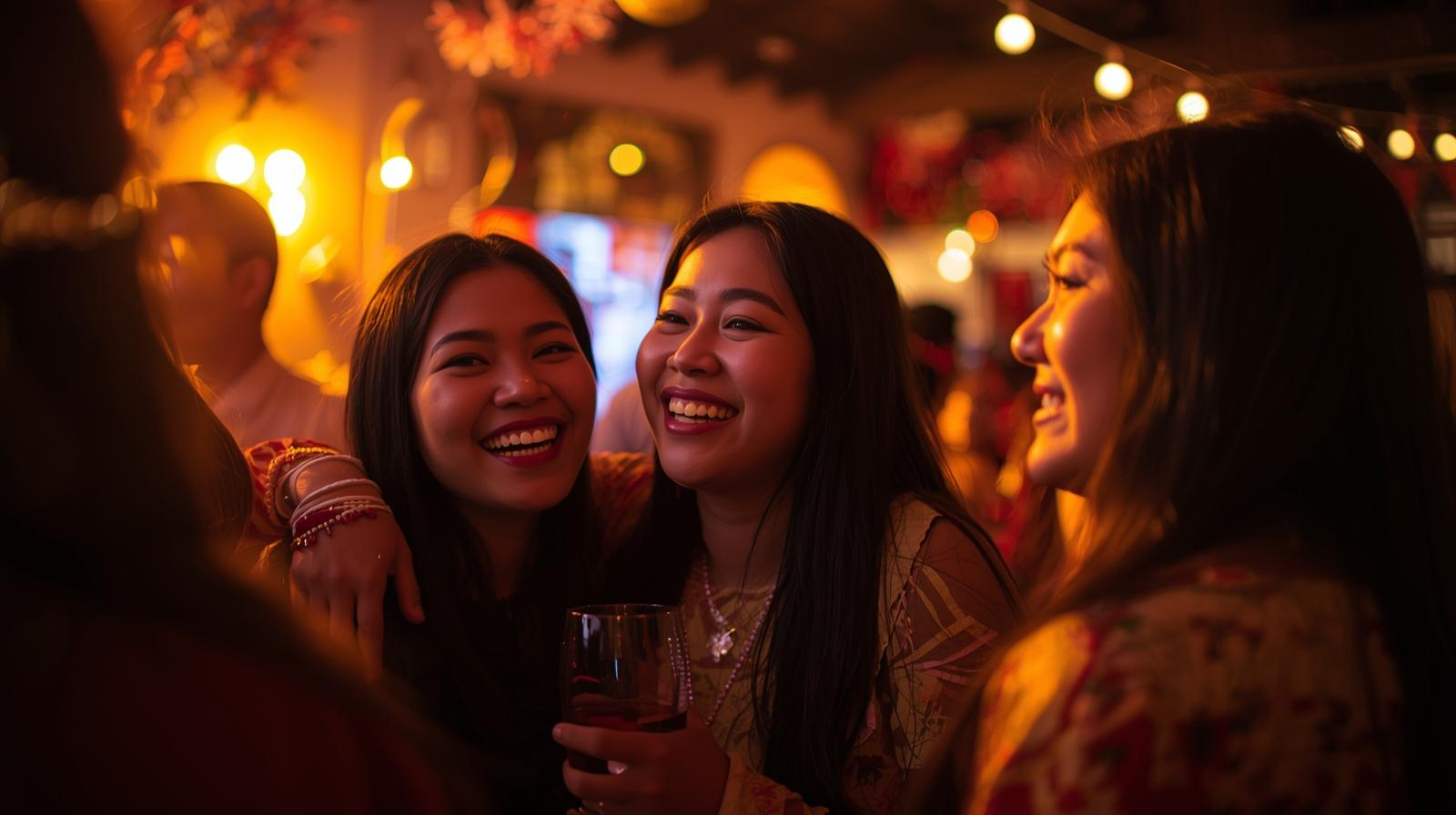
Even small movements during a party can help you stay alert after a heavy meal. When you stand up, walk around, or mingle from table to table, your muscles use a bit of circulating glucose. It’s not a workout, but it’s enough to ease the sugar spike.
Think of a typical Pinoy Christmas gathering. Someone always calls you over to see old photos. Pamangkins drag you to watch them open gifts. All of this counts.
These little bursts of activity keep your body from slipping into the “sit still and digest” mode that makes your eyelids heavy.
The trick is to stay engaged. Walk over to greet a relative you haven't seen. Check out what’s happening at the karaoke corner. Join the group wrapping leftovers in foil.
Light, natural movements help you stay comfortable instead of sluggish as the night goes on.
And that’s your game plan.
Remember, prioritize and control those portions.
Stick to it, and you’ll never spend a party in a coma again.

All these small moments are reminders of what makes Filipino celebrations special. The best part of any holiday meal isn’t the food. It’s the faces around the table and the stories that only come out when families gather.
BloodWorks Lab sends you and your loved ones warm wishes this holiday season. May your homes be filled with great health and good cheer.
As always, we are here.
Merry Christmas from all of us at BloodWorks Lab!