
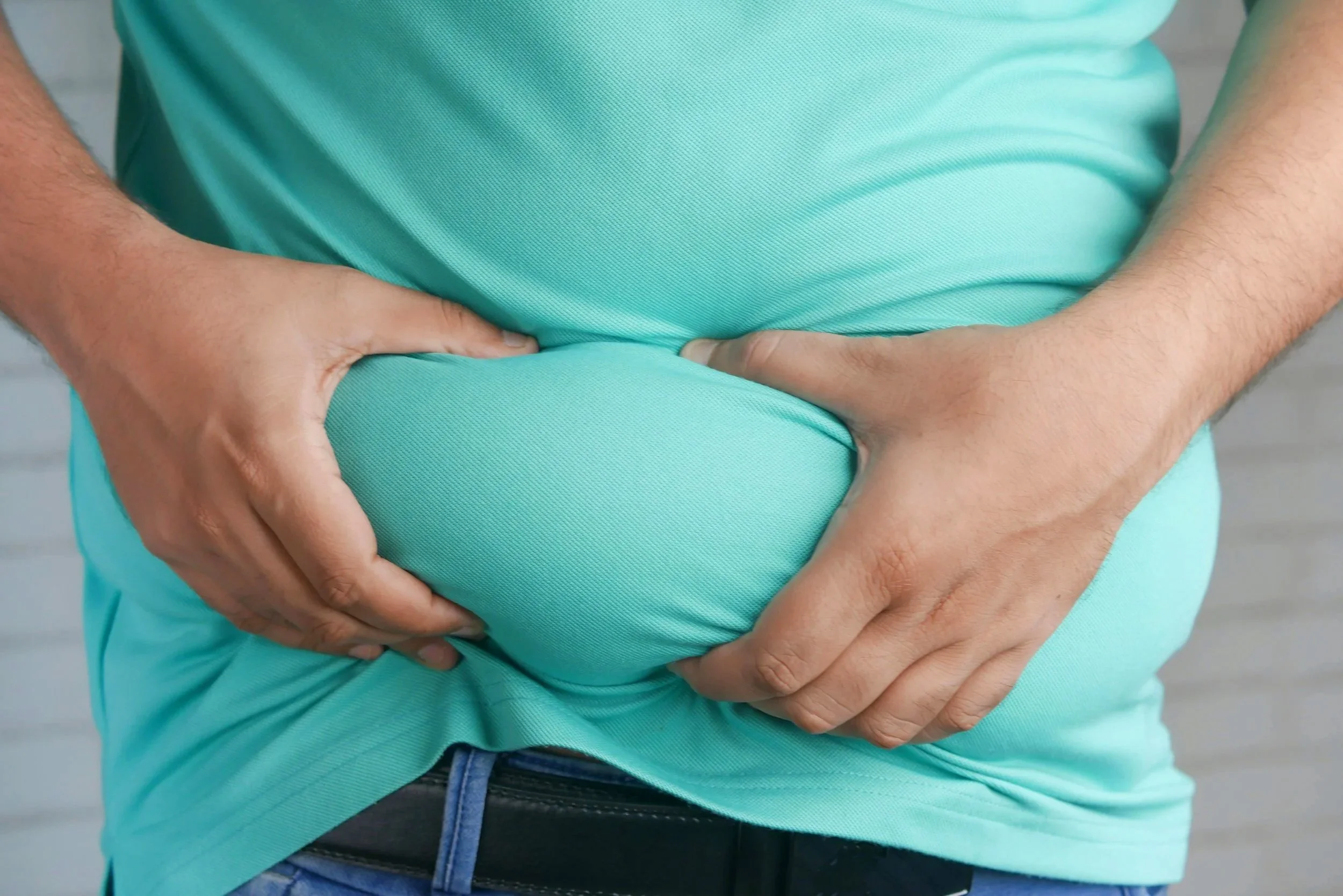
“I barely eat anything, but why does the scale still refuse to move?”
It seems like a legit question.
In this post, we’ll find out that there’s more to it than what goes on your plate. (There’s also what your body is doing with the food.) So two people can follow the same diet and still be zip codes apart.
Where does the difference actually come from?
Let’s find out…
What Is Metabolism?
I’m sure you’ve heard of the term, which is basically the body’s way of turning food into energy.
Often, “metabolism” is simplified into: Calories IN vs. Calories OUT.
That framing is useful but is oversimplified because your body is not a passive container of energy. It’s always actively deciding how to distribute, store, or burn that energy.
“Metabolism” can be broken into three main components:
1. Basal Energy Use

It’s the energy required to keep you alive at rest. This includes breathing, circulation, and organ function. This is the largest portion for most people.
Let that sink in.
It means around 2/3 of our calories are used up in the simple facts of living, your organs doing their thing.
If you think “resting energy” use is no big deal, think again. Even when you’re sitting, you’re effectively burning energy.
2. Physical Activity
This refers to any kind of physical movement. By simply moving around, you’re using energy and burning calories. For example, you’re using energy going down the stairs, or jogging, sweeping the floor, or even fidgeting.
Two people of similar height and weight can eat identical meals and still experience different energy outcomes because their bodies may not move in identical ways.
One might shift posture constantly throughout the day, while the other barely moves for long stretches. Those differences do not feel significant in the moment, but they do accumulate across hours.
The difference between individuals can sometimes account for several hundred calories per day.
3. Thermic Effect of Food
This is the energy used to digest and process what you eat. Even digestion uses up energy, and different food types require different amounts of energy.
Protein, for example, requires more energy to process than fats or carbohydrates.
Studies show that your body uses more energy to digest protein than fats or carbohydrates. In fact, about 20 to 30 percent of the calories in protein are burned just breaking it down and using it.
That means the same caloric intake can have different net results depending on what the food is made of.
So what's your diet made of?
The same calorie intake can produce slightly different usable energy depending on what the food is made of.
A 600-calorie meal made mostly of protein and vegetables will not be handled the same way as a 600-calorie meal made mostly of refined fats and carbohydrates.
Additionally, meals higher in protein tend to make us feel full longer, so reducing food intake.
Muscles: Burn More Calories

Two people can weigh the same but burn very different amounts of energy every day.
Where does the difference come from?
It’s from body composition.
The difference often comes down to what that weight is made of (muscle or fat).
Why?
Muscle is harder to burn than fat. It requires more energy to maintain. Fat, on the other hand, is far less demanding.
You want a faster metabolism? Make sure you have muscles.
A person with more lean muscle tends to burn more calories across a full day, even without changing activity levels.
Let’s take two people with identical body weight, eating the exact same food, and moving the same way. If one has more lean muscles than the other, then he will burn more calories…even if they eat the same meals and walk the same distance each day
Their total daily energy expenditure will be very different. The difference may not be dramatic in a single day, but it compounds over time.
Movement Means Calorie Expenditure

We think workouts burn the most calories. An hour at the gym feels like the main event. We’re sweating, exerting and catching our breath, while we barely break a sweat the rest of the day.
But the body does not see it that way. The hours outside exercise often decide more about the number of calories burned than the workout itself.
It’s not the 1-hour jog or gym work that matters. It’s the 23-hours outside of it.
We often obsess about calories used up during exercise, but are blind to the movements during the rest of the day.
We have something called NEAT or Non-Exercise Activity Thermogenesis, which includes all physical activities in the normal course of living that are outside structured exercise: walking to the kitchen, standing while talking, shifting posture, tapping your foot, carrying groceries, and every little movement that does not count as exercise.
They don’t sound much, but here’s the thing: They add up…especially when you have a full day of them.
A person might do 45-minutes in the gym, then spend the remaining 10 to 12 waking hours sitting at a desk, barely moving. That’s not good for your daily total of calories used.
Take another person who might have never stepped inside a gym, but takes phone calls while walking, stands frequently, paces during conversations, and takes short movement breaks. By the end of the day, the second person will easily burn significantly more calories.
Repeat that consistently over a few months, and the difference will be very significant.
Sleep & Weight Interaction

Many think sleeping can make one fat.
There’s barely any movement, and we’re relaxed, not exerting any effort, so there aren’t many calories used.
But in fact, the opposite is true. The lack of sleep can lead one to overeat and gain weight.
How?
It has something to do with the body’s signaling mechanism.
Lack of sleep increases ghrelin, which signals hunger, and reduces leptin, which signals satiety.
Studies have shown that sleep deprivation increases an individual’s desire to eat and ups his food intake. Because of this, the persistent lack of adequate sleep has been linked to weight gain, obesity, and some metabolic disorders.
Someone who sleeps poorly often wakes up already thinking about food, feels less satisfied after meals, and is more likely to snack. The same person on a week of solid sleep will report fewer cravings and more stable energy throughout the day.
Sleep loss also affects energy expenditure as well. Fatigue reduces spontaneous movement. People walk less, sit more, and unconsciously conserve energy. This lowers non-exercise activity.
And here’s even more bad news. Researchers discovered that even a single night of poor sleep can impair glucose regulation, making the body handle carbohydrates less efficiently. It doesn’t take much to disrupt the equilibrium. One night of poor sleep can do it.
In other words, adequate sleep is that important.
Stress and Weight Interaction

The body does not separate emotional and mental pressure from physical survival. Tight deadlines, financial strain, exhaustion, and constant mental overload can all trigger physiological responses that affect how energy is used and stored.
First of all, stress loops back to the issue of sleep, where stress often affects sleep quality. You already know how this leads to increased hunger, reduced insulin sensitivity, and more.
And then there’s the substance called cortisol, a hormone released during stress.
In short bursts, cortisol is useful, helping mobilize energy and keeping the body alert. Problems tend to appear when stress becomes chronic, and cortisol remains elevated for long periods. Research has linked prolonged cortisol exposure with increased appetite, stronger cravings for calorie-dense foods, and greater fat accumulation around the abdominal area.
In short, stress leads to…stress eating.
How Dieting Can Slow Things Down
Most people expect weight loss to be straightforward.
Eat less…lose weight…REPEAT.
What actually happens is less predictable.
Why?
Because your body adjusts.
When calories drop for an extended period, the body often responds by reducing energy expenditure. (This includes both resting energy and the energy spent on everyday movement.)
Weight loss slows down as a result, even when one’s diet is consistent.
This process is called “adaptive thermogenesis.”
In controlled studies, individuals undergoing caloric restrictions have compensated with a decrease in expenditure of energy.
For example, someone begins a strict diet and initially loses weight quickly. After a few weeks, progress slows. They have not changed their food choices, but they notice they sit more often, feel less driven to move, and find workouts harder to complete. The system has adjusted.
We’ve seen this in shows like “The Biggest Loser,” where initial leaps in weight loss (mostly water) slow down over time.
This is where frustration often builds. People assume the diet has failed. In reality, the body has merely executed a predictable physiological response to caloric restriction.
Adaptive metabolism is not a malfunction, but a normal response.
So, how can we effectively lose weight then?
Practical Strategies For Mastering Weight
Many try to fix metabolism with one lever, usually eating less. But the system responds better to multiple small inputs consistently working together over time.
We’re talking about habits here, not short bursts.
Here are 5 things you must do if you want to effectively lose weight.
1. Pair diet with movement.
But not just exercise.
Getting physically “busy” matters just as much as structured exercise. Long periods of sitting tend to suppress total energy use, so do everything to up how you move. Increasing steps, standing more often, or adding short walks after meals helps maintain a higher baseline of energy expenditure throughout the day. These are where the largest unnoticed differences accumulate.
If you want to lose weight, spend that energy and burn those calories…MOVE.
2. Incorporate structured exercise or gym work.
Strength training can be very effective. It helps maintain lean tissue, which supports resting energy use and improves how the body handles glucose.
Just be warned that your body will quickly adapt. Your routines will become easier. Take that as a suggestion to up the ante.
When you sense your body adjusting, that’s when you also increase reps, load and intensity of your gym work or exercises.
3. Increase your protein intake.
Higher protein meals increase the energy cost of digestion and tend to reduce spontaneous cravings throughout the day. Studies show that higher protein diets often lead to lower overall energy consumption.
4. Sleep 7-8 hours a day.

As we’ve already discussed, sleep regulates appetite and energy output.
Inconsistent ZZZZs tend to increase hunger signals and reduce spontaneous movement, quietly shifting energy balance even if food intake remains the same. Also, sleep restriction studies consistently show increases in appetite and calorie intake. Don’t fight the cravings. It’s a losing battle. Prevent it from rearing its ugly head in the first place by making sure you give your body enough rest.
5. Manage stress
Stress management is less about elimination and more about reducing chronic load.
Even small reductions can go a long way in managing stress. The idea here is “RESET,” giving yourself a clean slate so pressures don’t pile up.
Here are some ways that can be implemented:
Catch stress spirals with an “interrupt.” This can be in the form of a short walk, a cold/warm shower, or listening to music.
Make stress relief part of your routine. For example, make it a point to stretch your back and neck every hour. Or be sure to stand up and take a breather every 60 minutes, regardless if you need to or not.
Have a “release valve” of hobbies or activities for the day, week, month, year. Make sure you have go-to stress busters in the short term, medium term, and long term.
Shield yourself from things that inadvertently add to your mental load, like social media, news, unnecessary messages, and notifications.
Nobody can be completely free of stress. But reducing the load and preventing them from piling up can prevent your body from stress eating.
Your weight is not controlled by a single action. It is a reflection, not only of your DNA, but a pattern of inputs over long periods of time. If you take care of your sleep, diet and movements, you can easily manage and maintain the weight of your dreams.
Are you planning to lose weight safely and effectively?
BloodWorks’ “Diet/Weight Management Package” monitors your progress and blood chemistry to make sure everything is in balance.
We are your one-stop shop for all your laboratory needs, offering fast and accurate medical tests and screenings.
BloodWorks was the first in the country to offer the Anti-Acetylcholine Receptor (IgG) Antibody Test and the Anti-N-Methyl-D-Aspartate Receptor (Anti-NMDA Receptor) Antibody Test.
Book your appointment today.
Our branches are in Alabang, Katipunan, and Cebu.