
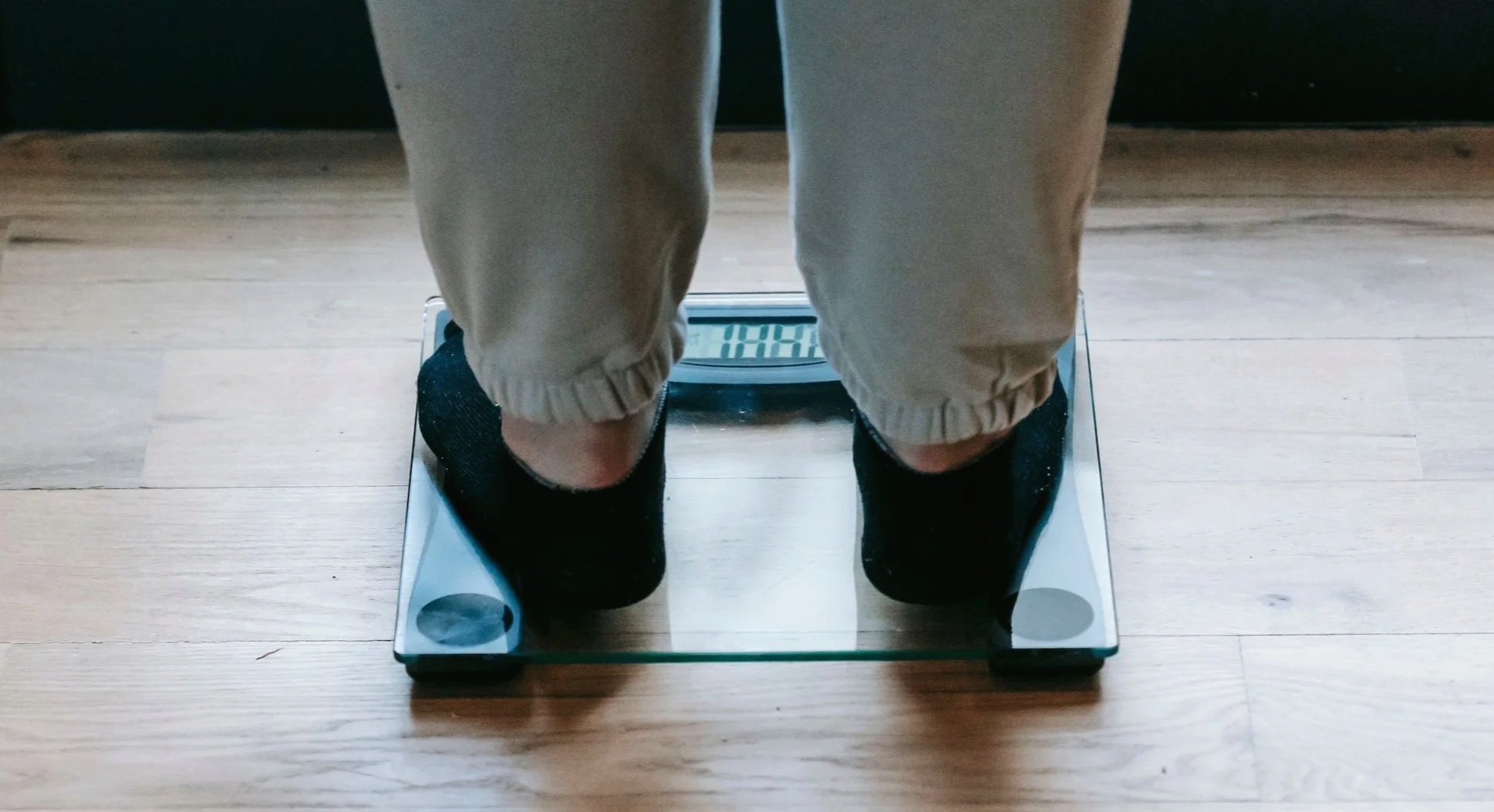
“When did this happen?!”
You step onto the scale and realize you’re 10 pounds heavier.
You step on and off for unbelief, but the reading is persistent. Somehow, somewhere, you’ve gained a few pounds…even if you did not sign off on it.
In this post, we’re going to talk about that silent drift to unhealthiness.
Nobody plans to develop high blood pressure, lose their stamina, struggle with poor sleep, or hear their doctor say “prediabetes” during a routine checkup. Yet these things happen every day.
The question isn’t why people become unhealthy.
The question is why we seldom see it happening.
(And what can we do about it?)
Humans Are Bad at Detecting Slow Change

Human beings are remarkably sensitive to sudden changes but are surprisingly blind to gradual change. (You probably know the story of the frog who sits cluelessly in gradually boiling water, right?)
Imagine seeing a friend you haven't met in years.
The changes will be obvious: more wrinkles, less hair, emerging tired around the middle.
Now imagine seeing that fellow every day.
You wouldn’t notice the change at all.
The same thing applies to our health.
Nobody notices the first pound, or that first small drop in fitness. Nobody notices when climbing stairs becomes 10% harder. Our brains are built to compare today with yesterday, not today with five years ago.
We call this phenomenon “change blindness,” the tendency to miss changes…especially, in this case, when they occur very slowly. It’s why homeowners often fail to notice cracks spreading across a wall, why parents are stunned by how much their children have grown when looking at old photos.
A person may gain just one or two pounds a year. That’s nothing. But over a decade, that adds up to an extra 10 to 20 pounds that weren’t there before.
And this is one reason why chronic diseases often seem to appear out of nowhere.
But the silent truth is that high blood pressure doesn’t develop overnight. Insulin resistance doesn’t come out after a weekend binge. Poor fitness is not a result of a single missed workout.
The underlying processes may have been progressing quietly for years before they become visible.
The danger isn’t that these changes are hidden. In fact, quite the opposite. The real danger is that they’re hidden in plain sight.
The Comfort Trap
Slipping into unhealthiness is very easy. It’s one of the easiest things to do.
It’s one of the great paradoxes of modern life. Many of the conveniences that improve our lives also remove the small physical demands that once kept us healthy.
Consider a typical day:
You drive instead of walk. Take the elevator instead of the stairs. Send an email instead of walking to a colleague’s desk. When you get home, you order food instead of preparing it. Then you spend the next few hours on the couch instead of outside.
None of these decisions is irrational. In fact, each one saves time, energy, or effort.
The problem is that they all point in the same direction. (The wrong one!) Not toward illness necessarily, but toward inactivity, excess calories, poor sleep, and chronic stress.
Modern life has that kind of pull, and we’ve normalized it.
Researchers sometimes refer to this as an “obesogenic environment.”
It’s a setting where cars are preferred over walking. Highly processed foods available everywhere, not to mention portion sizes that can feed a friend group. Sedentary entertainment is endlessly accessible, and the most movement done is the one performed by one’s eyes.
It’s very counterintuitive to be physically active in such an environment. Not only is there a shortage of safe spaces to do things like run, but physical activity often requires deliberate planning, instead of occurring naturally throughout the day.
And if you still haven’t noticed, it’s a setting that ultimately results in weight gain and metabolic disease. You don’t even have to try very hard.
Again, the issue isn’t about one meal.
People stopped moving throughout the day.
The short walks disappeared.
The errands became car rides.
The standing became sitting.
The stairs became elevators.
The road to unhealthiness is actually very easy.
One simply follows the path of least resistance.
Your Body “Forgives,” But It Does Not “Forget”

People get blindsided by the drift because of one important trait of the body.
It absorbs strain for years without any complaints.
A person can feel “fine” even while living an unhealthy lifestyle. Whoever got sick smoking his first ten packs or drinking his few cases of beer? Having a steady diet of processed food or sweets, especially when young and hardy, didn’t send anyone to the emergency room.
None of these processes feels dramatic in the moment, so a false sense of safety is created.
But behind the scenes, a long list of changes is unfolding quietly: rising blood sugar, increasing blood pressure, gradual loss of muscle mass, reduced insulin sensitivity, and growing visceral fat around internal organs.
All this without any signs on the surface. An individual may still pass a basic health screening. He may even thank his genes because he feels healthier than ever!
But the body keeps score. It might just be the most honest tally bearer ever.
By the time symptoms present themselves: persistent fatigue, shortness of breath during mild exertion, elevated lab results, or joint pain, the underlying process has often been underway for years.
This is why many diagnoses feel sudden.
The diagnosis may be sudden, but the condition is not.
The Warning Signs Most People Ignore
As we’ve said, the body is forgiving. It is highly resilient and even compensates for poor lifestyle choices.
At a young age, this is easy. But over time, poor choices become harder to ignore.
Starting in the 30s, muscle mass begins to decline gradually in many adults (unless actively maintained). Research on sarcopenia shows losses of roughly 3–8% per decade, with acceleration after midlife in inactive individuals.
So one of the earliest signs is reduced physical capacity.

Climbing stairs feels slightly harder than it used to be. Carrying a bunch of groceries invites you to catch your breath. The activities that never used to matter now cause you to think twice: “Maganda ba yung view sa taas? Dito nalang ako…kayo nalang.”
That’s a sign…but not just of simple aging.
Another subtle signal is recovery time.
You used to bounce back from treks, full-court basketball, and workouts like they were nothing. Now you’re looking forward to days of soreness and joint pain. Again, people can interpret this as a sign of aging alone, without considering inactivity, sleep quality, or nutrition as contributing factors.
Even mood and cognition begin to shift.
Mild brain fog, lower frustration tolerance, less mental clarity in the afternoons. These reflect poor lifestyle choices that accumulate over time.
The most dangerous point is the normalization of these things. It’s when the individual has all but accepted that this is the new baseline.
But these are actually written records of past choices, the body telling you, “Remember all the last-minute “upsizes” you did at the fast food counter over the years? Well here’s your latest total…”
But The Good News: Drift Works Both Ways
The same mechanism that leads to poor health can also move in the other direction. Compounding works both ways.
A person who adds 20 minutes of walking per day doesn’t feel any different after one week. After one month, changes are still subtle. But after a year, that small thing adds up to more than 120 hours of movement…enough to shift cardiovascular fitness, glucose control, and energy levels.
Research supports this idea of cumulative benefit. Moderate physical activity done consistently shows a reduced risk of cardiovascular disease, improved insulin sensitivity, and weight loss.
Note that the effect is not dependent on intensity but on consistency.
The same applies to nutrition.
Saying no to one ultra-processed snack may feel trivial. But over months, that change alone can reduce calorie intake, stabilize blood sugar, and improve weight. Hey, it can even shift taste preferences. Foods that once felt “normal” will begin to feel “too sweet” or “too salty”, while healthier foods become more satisfying.
Sleep works in the same way.
Adding even 30–45 minutes of additional sleep per night can improve appetite regulation, cognitive performance, and emotional stability.
Research has shown that chronic partial sleep deprivation alters hormones related to hunger, particularly ghrelin and leptin, increasing appetite and cravings for high-calorie foods. Restoring sleep gradually reverses these patterns.
Remember, the changes don’t have to be perfect. They only need to point to the right direction.
A lifestyle overhaul is not required to “drift” in the opposite direction. We only need small, repeatable behaviors that slowly accumulate.

Here are examples of some things you can do:
Stand up and stretch every hour.
Walk while taking phone calls.
Do 10 push-ups before your morning shower.
Do bodyweight squats while waiting for coffee to brew.
Cook one additional meal at home each week.
Replace one sugary drink with water.
Add a serving of vegetables to one meal each day.
There’s no single day when someone becomes “fit” again.
There are only days when health shifts slightly upward instead of slightly downward.
Over time, those small shifts accumulate to have a visible impact…the weighing scale for one.
The drift, in either direction, is very hard to see in the moment.
That’s why regular checkups matter. Periodic physical examinations, blood pressure measurements, and routine laboratory tests provide something your perceptions cannot: an objective record of your trajectory.
They allow you to spot small changes before they become major problems.
BloodWorks Labs offers checkup packages and lab tests that allow you to monitor your health. We are your one-stop shop for all your blood test needs.
Book your appointment today.
Our branches are in Alabang, Katipunan, and Cebu.